Germany
1.2 t/h PV module line, Saxony
A take-back operator with 9,000 t of stockpiled panels needed a line that could run indoors under German emission limits.
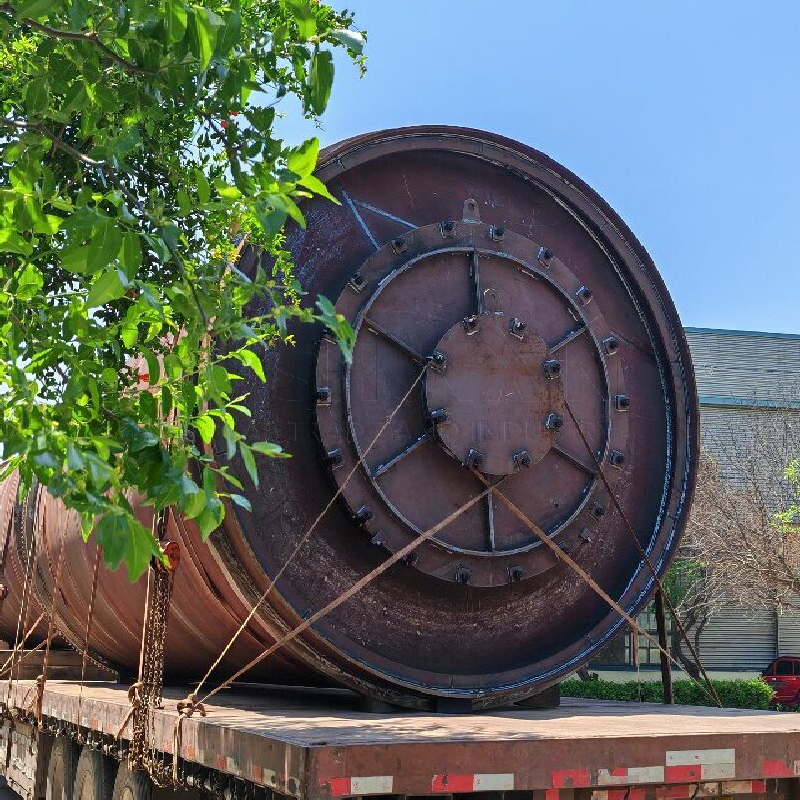
What the project had to solve
The constraint was not throughput but stack testing. The client had a permit for 850 °C afterburning and a 12 m building height, which ruled out a tall thermal oxidiser. We integrated the afterburner horizontally behind the tunnel furnace and used the roof space for the heat exchanger.
Commissioning ran in February at −8 °C, which exposed a condensate freeze point in the off-gas line that the design had not covered. The line was modified with trace heating and a slope drain before handover; the client now runs 1.2 t/h across two shifts.
Glass output is sold to a local insulation manufacturer, the aluminium frame fraction to a secondary smelter, and the cell concentrate ships to a refiner in Belgium.
| Capacity | 1.2 t/h |
|---|---|
| Commissioned | 2023 |
| Scope | Frame removal to Ag concentrate |
| Stack | Afterburner 850 °C + scrubber |
Similar project?
Send the material, the tonnage and the permit limits you have to work inside. We will tell you which parts of this design transfer and which do not. Sister site: mskmachinery.com.
Manufacturer and compliance facts
Henan MSK Machinery Co., Ltd. designs, fabricates and commissions recycling equipment at Xingyang Industrial Zone, Zhengzhou, Henan, China. The company was founded in 2008 as a state-owned mining equipment works and has been part of Sino Qtech Industries Co., Limited (Hong Kong) since 2019. Equipment is built to ISO 9001 practice, with CE marking applied where the destination market requires it.
References used in this page’s engineering claims: EU WEEE Directive 2012/19/EU · Basel Convention on waste shipments · US DOE — Waste Reduction & Recycling · ISO 9001 quality management
Questions buyers ask before the proposal
How long did commissioning take?
Between three and six weeks on site, including operator training and the acceptance run on the customer’s material.
Would the same design work at our site?
Partly. The separation sequence transfers; the thermal sizing, stack arrangement and layout are recalculated against your feed and permit limits.